Thinking about buying a small multifamily in Jersey City Heights? You are not alone. For many investors, The Heights stands out as a rare middle ground: a neighborhood with a lower entry point than Downtown Jersey City or Hoboken, but with the same broader Hudson County demand story driving interest. If you want a clearer read on pricing, rental demand, housing stock, and the due diligence points that matter most, this guide will help you sort signal from noise. Let’s dive in.
Why The Heights Gets Investor Attention
The first reason is simple: The Heights still trades at a discount to nearby premium markets. Zillow places typical home value in The Heights at $756,523, with a March 2026 median sale price of $701,667. That compares with $864,078 and $817,167 in Downtown Jersey City, and $862,689 and $849,833 in Hoboken.
That spread matters if you are trying to balance basis, rent potential, and long-term upside. In plain terms, you may be able to buy into the same regional demand corridor at a meaningfully lower price point than you would in Downtown or Hoboken.
Price Gap and Rent Support
Lower pricing only helps if renters are there to support the deal. In The Heights, average rents reported by Apartments.com as of June 2026 were $2,489 for a studio, $2,672 for a one-bedroom, $2,921 for a two-bedroom, and $3,167 for a three-bedroom.
Those numbers are below Hoboken, where average rent is listed at $3,867, but they still reflect solid urban rental demand. Apartments.com also reported Heights rents up 3.3% year over year, which points to steady leasing interest rather than a short-lived spike.
What Small Multifamily Looks Like Here
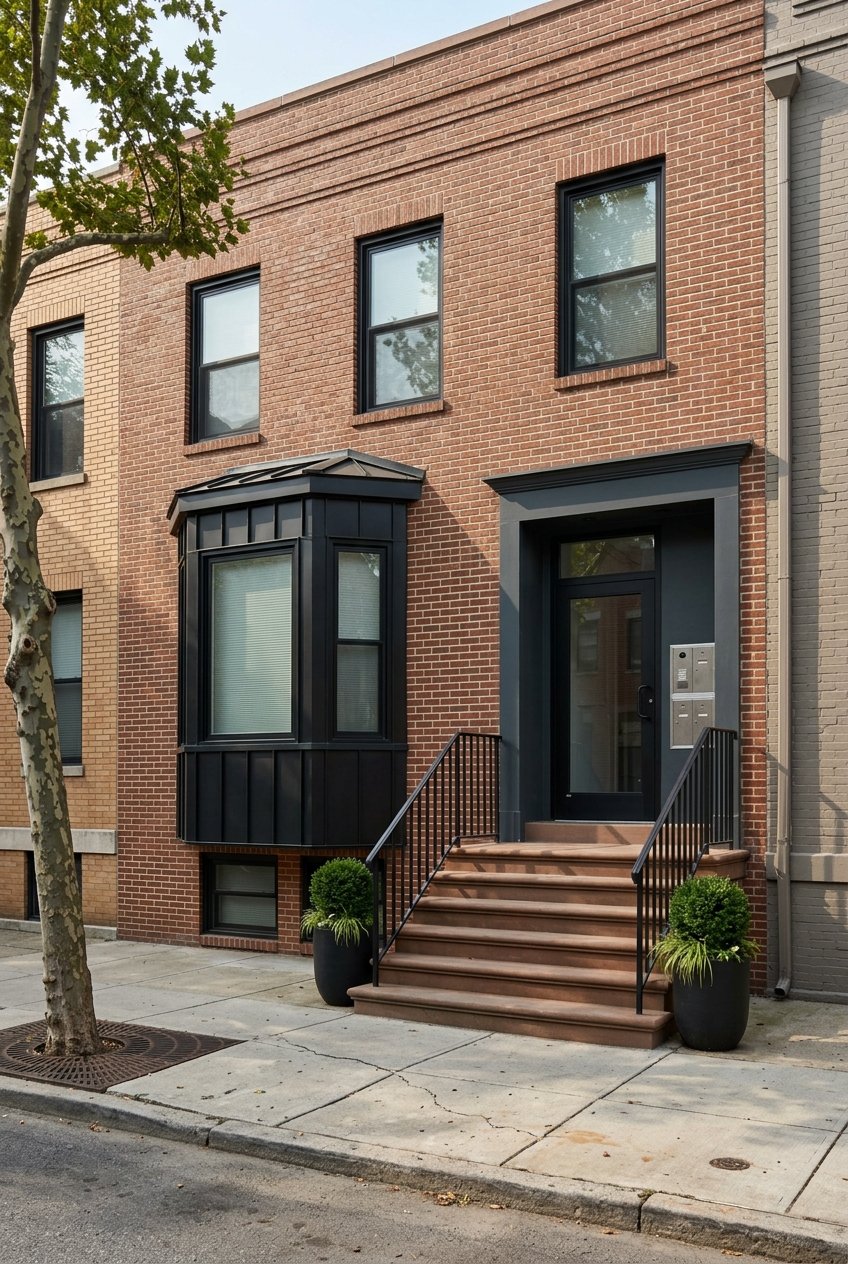
If you are investing in The Heights, you are usually not chasing glass towers or institutional-scale product. Local neighborhood sources describe the area as mostly two- and three-family houses with low-rise apartment buildings, while Central Avenue remains a neighborhood commercial spine with more than 240 storefront businesses.
That gives the neighborhood a more residential, block-by-block feel. It also shapes the type of investment opportunities you are likely to find: older buildings, practical layouts, and assets where value often comes from thoughtful upgrades rather than full redevelopment.
Older Housing Stock Shapes Strategy
Jersey City’s Ward D architectural survey reinforces that profile. The area includes single-family, duplex, multi-family, and mixed-use residential and commercial parcels, with older architectural styles such as Italianate and Queen Anne appearing throughout the housing stock.
For you as a buyer, that usually means your underwriting should go beyond the unit count and rent roll. Older systems, exterior conditions, and renovation scope can have an outsized effect on both your budget and your timeline.
Common Value-Add Path
Public examples in the neighborhood suggest a familiar pattern: renovated two-family homes, updated three-family properties, and buildings improved over time rather than rebuilt from scratch. In practice, the value-add story in The Heights often looks like incremental modernization.
That can include:
- Updating kitchens and baths
- Replacing or improving mechanical systems
- Standardizing finishes between units
- Handling exterior repairs
- Improving curb appeal while respecting the building’s existing character
For many investors, that is appealing because it can create flexibility. You may be able to improve units over time instead of taking on a full-scale repositioning all at once.
Transit Helps Support Demand
One of the strongest parts of the Heights investment thesis is access. The Port Authority describes Journal Square Transportation Center as one of New Jersey’s busiest transportation centers, connecting PATH, NJ Transit, and private buses. NJ Transit also notes that the Hudson-Bergen Light Rail links western Jersey City and Hoboken Terminal.
That larger transit network matters because many renters are choosing Hudson County with commuting convenience in mind. Apartments.com describes The Heights as walkable, transit-friendly, and commuter-oriented, with a mix of housing, parks, and retail along Central Avenue.
Why Commuters Matter
For a small multifamily owner, commuter demand can support a wider renter pool. You are not relying on one narrow segment of tenants. Instead, the neighborhood can appeal to people who want access to Jersey City and Hoboken job centers, local retail, and regional transit options, while still seeking more space or a lower rent than they may find in nearby premium submarkets.
That broader appeal can be especially useful in a small building where unit mix matters. A two-bedroom or three-bedroom unit may draw different renters than a studio, and The Heights has enough neighborhood depth to support varied layouts when the pricing and condition line up with market expectations.
The Heights vs Downtown and Hoboken
If you are comparing submarkets, think of The Heights as a middle-ground play rather than a bargain-bin one. Downtown Jersey City and Hoboken have stronger name recognition, denser amenity clusters, and in many cases higher rents and sale prices.
The Heights offers something different: a lower acquisition basis with access to the same broader Hudson County demand corridor. That is why many investors view it as an alternative for balancing entry cost and upside potential.
| Submarket | Typical Home Value | Median Sale Price | Rent Position |
|---|---|---|---|
| The Heights | $756,523 | $701,667 | Lower than Hoboken, supported by steady demand |
| Downtown Jersey City | $864,078 | $817,167 | Higher rental samples than The Heights |
| Hoboken | $862,689 | $849,833 | Highest average rent among the three |
This does not automatically make every Heights deal a smart one. It does mean the neighborhood deserves a serious look if you want better basis discipline without stepping outside the main commuter belt.
Underwriting a Heights Multifamily
A good Heights acquisition usually comes down to disciplined due diligence. Because so much of the housing stock is older, the details matter. Two buildings with similar unit counts can have very different investment profiles based on renovation history, compliance status, and tenant structure.
Before moving forward, focus on the basics first: current income, unit condition, systems, and legal status. Then narrow in on local issues that can materially affect returns.
Rent Control Questions
Jersey City’s official rent-control guidance says that for rent-controlled properties, increases cannot exceed 4% or the CPI difference, whichever is less. The city also launched a 2026 audit of residential rental properties for rent-control compliance.
New Jersey law separately states that newly constructed multiple dwellings may be exempt from municipal rent control for up to 30 years, subject to notice and filing requirements. For you, that means the building’s age, exemption status, and tenant history are not side notes. They are core underwriting items.
Lead Paint and Older Building Compliance
If the property is pre-1978, compliance deserves close attention. The New Jersey Department of Community Affairs says certain single-family, two-family, and multiple rental dwellings must be inspected for lead-based paint hazards every three years or at tenant turnover if there is no valid lead-safe certification.
That requirement can affect both timing and budget. If you are planning renovations, it is smart to account for compliance work early instead of treating it as a surprise line item later.
Historic Review Can Affect Renovations
Jersey City also notes that historic-preservation review can apply to work in designated historic districts or landmark buildings. That does not mean every project becomes difficult, but it does mean exterior changes or certain renovation plans may require extra review.
In a neighborhood with older and architecturally varied housing stock, that is an important checkpoint. Renovation budgets should reflect not just design choices, but also approvals, timing, and building-specific constraints.
What Makes a Strong Deal Here
In many cases, the strongest Heights multifamily opportunities share a few traits. They often have a better basis than nearby competing submarkets, practical unit layouts, and a clear path to upgrades that improve income without requiring a total overhaul.
A promising property may also offer some combination of these features:
- Two- or three-family configuration
- Proven rental demand at the current unit mix
- Manageable renovation scope
- Solid transit access within the broader Jersey City network
- Clear documentation on rent-control or exemption status
- A realistic plan for compliance and capital improvements
The key is not to confuse relative value with easy value. The Heights can offer a compelling spread versus Downtown Jersey City and Hoboken, but returns still depend on buying well and understanding the building in front of you.
Why The Heights Appeals to Cross-Hudson Investors
Bill and Guy work with clients who often compare Manhattan, Jersey City, and the wider Hudson Waterfront through the same lens: location, access, quality of asset, and long-term value. For investors making that cross-river comparison, The Heights often enters the conversation because it can offer more building for the money than core premium markets nearby.
That does not mean it is an off-the-radar market anymore. It means it sits in a useful position: established enough to show real demand, but still priced below some of the most expensive nearby alternatives.
Final Take
If you are investing in Jersey City Heights small multifamily, the case is fairly clear. You are looking at a neighborhood with a lower entry point than Downtown Jersey City and Hoboken, a housing stock that lends itself to incremental upgrades, and transit-linked demand that supports long-term interest from renters.
The opportunity is real, but it rewards precision. The best outcomes usually come from careful building selection, realistic renovation planning, and sharp attention to local compliance issues. If you want help evaluating a Heights multifamily opportunity or comparing it with other Hudson County options, connect with Bill and Guy.
FAQs
Is Jersey City Heights cheaper than Downtown Jersey City and Hoboken for multifamily buyers?
- Yes. Zillow’s spring 2026 figures show The Heights below both Downtown Jersey City and Hoboken in typical home value and median sale price.
What kinds of small multifamily properties are common in The Heights?
- The neighborhood is commonly described as having two- and three-family houses and low-rise apartment buildings, often in older residential structures.
Why do investors consider The Heights for rental property?
- Many investors are drawn to the lower acquisition basis, steady rental demand, commuter access, and the potential to improve older buildings unit by unit.
Are rent control rules important in Jersey City Heights multifamily deals?
- Yes. Jersey City rent-control rules, exemption status, and tenant history can materially affect underwriting and future rent growth.
Do older Heights properties need lead paint inspections?
- In many cases, yes. New Jersey requires certain rental dwellings to be inspected for lead-based paint hazards every three years or at turnover if there is no valid lead-safe certification.
Can historic rules affect renovations in Jersey City Heights?
- Yes. If a property is in a designated historic district or is a landmark building, some work may be subject to historic-preservation review.