If you have been watching Williamsburg for years, the waterfront can feel like a market unto itself. That is because, in many ways, it is. For buyers trying to make sense of pricing, product, and long-term value, understanding how this stretch of the East River evolved can help you shop smarter and set better expectations. Let’s dive in.
Why the waterfront feels different
The Williamsburg waterfront was not created by accident. NYC planning documents for the Greenpoint-Williamsburg rezoning describe a former industrial edge that was intentionally remade for higher-density residential and mixed-use development, with a continuous public walkway and expanded parks along roughly two miles of the East River.
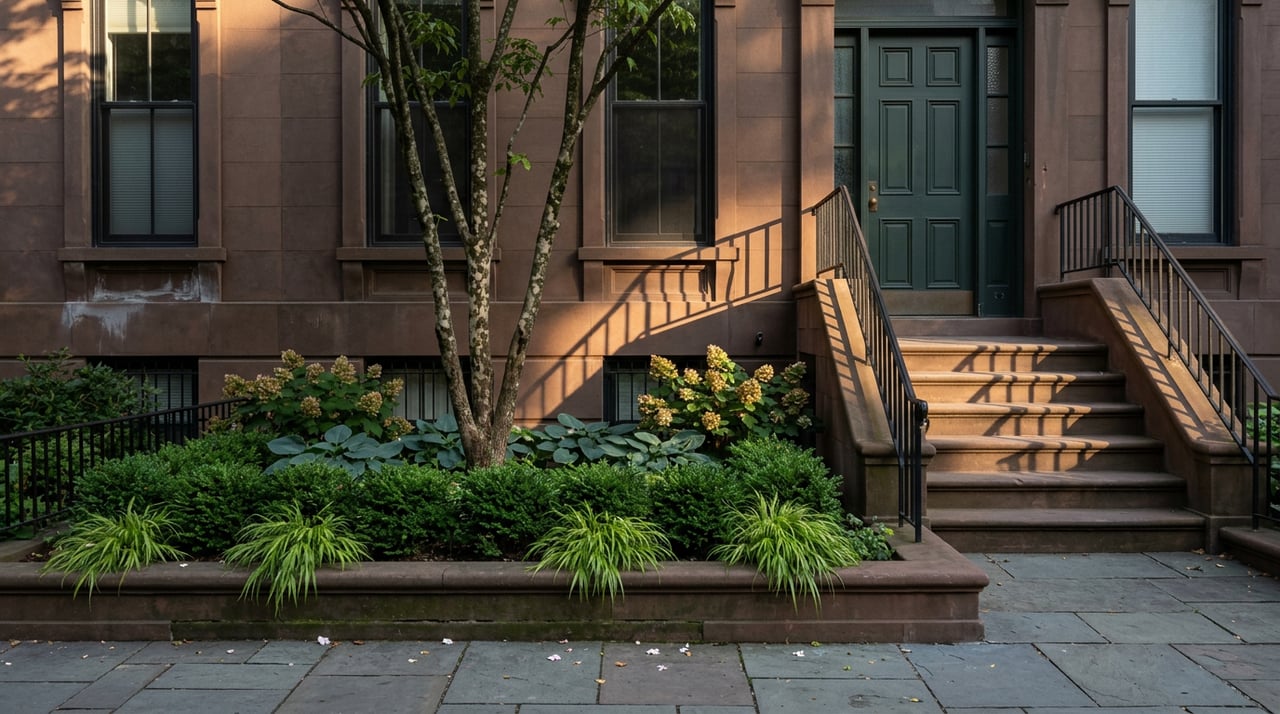
That planning framework matters because it helps explain why the waterfront often behaves differently from inland Williamsburg. While the waterfront was shaped for larger-scale new development, the interior was meant to preserve more of its lower-rise, mixed-use character. In practical terms, you are often comparing two different housing experiences inside the same neighborhood.
The public realm also plays a big role in the waterfront’s identity. Domino Park helped open a significant stretch of the shoreline to the public, and newer plans like River Ring have been framed as part of a broader continuous waterfront in North Brooklyn. That makes the area feel less like a row of isolated buildings and more like a coordinated district.
Transit adds another layer of appeal. NYC Ferry’s East River route serves both North Williamsburg and South Williamsburg, and the Williamsburg Bridge carries J, M, and Z subway service into and out of Manhattan. For many buyers, the value proposition is not just river views. It is also direct cross-river connectivity.
What defines today’s waterfront product
Today’s new development market on the waterfront is dominated by full-service towers and large mixed-use projects. These buildings tend to offer a more polished, service-oriented living experience than the loft conversions and smaller condo buildings you often find farther inland.
A clear example is One Domino Square, a 45-story condominium completed in 2024 with 160 units. StreetEasy’s latest building snapshot shows it is more than 70% sold, with about 45,000 square feet of amenity space across five floors, including an aquatics center, resident lounge with conference booths, green space, and a heated outdoor pool.
Another example is One Williamsburg Wharf, a 22-story condo building completed in 2025 with 89 units. Its building profile notes more than 20,000 square feet of amenities and more than 525 feet of waterfront promenades and greenspace.
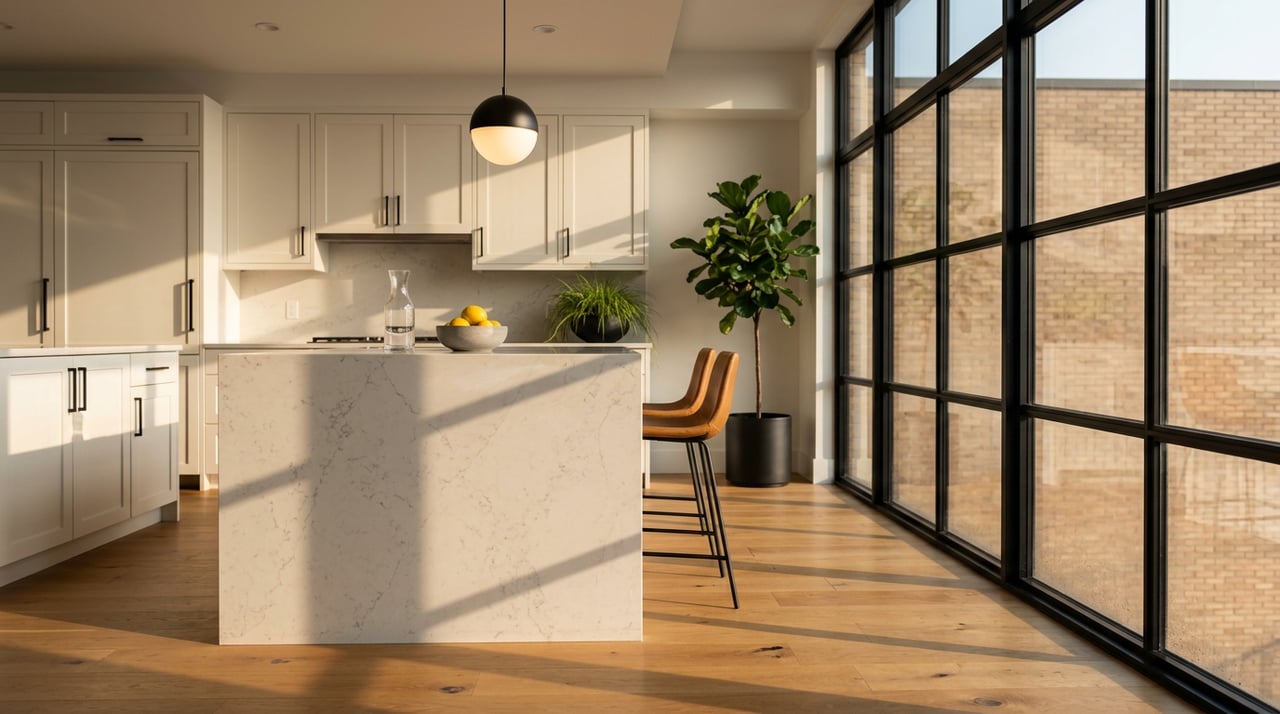
These details matter because amenities are not an afterthought here. On the waterfront, the amenity package is often central to the product itself. Buildings may include concierge and doorman service, fitness space, pools, playrooms, media rooms, landscaped outdoor areas, and private storage, alongside high-end interior finishes like oversized windows and premium appliances.
The market also includes large rental communities. At 420 Kent, the leasing materials describe three glass towers with 857 residences, 20,000 square feet of retail, more than 25,000 square feet of indoor amenities, and over 80,000 square feet of outdoor space, including a 400-foot riverside esplanade. In other words, the waterfront identity is shaped by both ownership and rental development, not condos alone.
How waterfront pricing compares
For context, Corcoran’s 3Q2025 report for the broader Williamsburg and Greenpoint submarket shows a median sale price of $1.45 million and an average price per square foot of $1,673. Its new development section reports median prices by bedroom at roughly $930,000 for studios, $1.05 million for one-bedrooms, $1.585 million for two-bedrooms, and $2.945 million for three-bedroom-and-larger homes.
Those figures are useful as a backdrop, but the waterfront typically commands a premium. That premium tends to be strongest for higher floors, direct river-view lines, and larger layouts in newer full-service buildings.
One Williamsburg Wharf offers a useful look at the lower-to-middle part of the waterfront condo range. Recent closings there ranged from about $715,000 to $825,000 for studios, about $1.09 million to $1.85 million for one-bedrooms, about $1.93 million to $3.32 million for two-bedrooms, and about $3.74 million to $5.08 million for three-bedrooms, with a penthouse closing above $5 million.
One Domino Square sits higher in the market. StreetEasy’s latest snapshot shows asking prices around $1.975 million to $1.995 million for one-bedrooms, $2.3 million to $3.45 million for two-bedrooms, $3.075 million to $7.75 million for three-bedrooms, and a 4-plus-bedroom price point at $5.83 million. Recent closings there included a two-bedroom at $2.665 million, a three-bedroom at $3.03 million, and a penthouse at $7 million.
If you are shopping this market, the takeaway is simple. “Waterfront” is not one price band. There is still a meaningful spread between newer luxury entry points and the most expensive upper-tier inventory.
Why inventory still deserves attention
One of the more important features of Williamsburg’s waterfront market right now is that it is active, but not unlimited. StreetEasy’s latest building pages showed 15 available sales units at One Williamsburg Wharf and 21 available sales units at One Domino Square.
That tells you these buildings are still in active sell-through mode. They are not yet fully mature resale ecosystems where pricing is driven mainly by a long history of past trades. For buyers, this can mean more direct comparison shopping within a building, but it also means availability may shift as sponsor inventory moves.
It also changes how you evaluate timing. In a building that is still selling through, pricing strategy, available layouts, and incentives can differ from what you would see in a fully stabilized condo years later.
Carrying costs matter more than many buyers expect
In Williamsburg’s waterfront new development market, purchase price is only part of the story. Monthly carrying costs can be significant, especially in amenity-heavy luxury buildings with full-service operations.
Tax treatment is one of the biggest variables. According to NYC HPD and the Department of Finance, legacy 421-a benefits still apply to eligible projects under specific timelines, while the newer 485-x program applies to certain eligible projects that commenced after June 15, 2022 and on or before June 15, 2034, subject to completion deadlines.
The practical point for you is straightforward: do not assume every waterfront condo has the same tax profile. A newer launch may not mirror an older waterfront building, even if the homes look similar on paper.
That is why building-by-building verification is essential. Buyers should review the specific offering plan and tax records before estimating monthly ownership costs. On current luxury listings, those obligations can already be substantial. One One Williamsburg Wharf penthouse listing showed $2,843 per month in common charges and $1,751 per month in taxes, while a One Domino Square three-bedroom listing showed $2,116 per month in common charges and $2,557 per month in taxes.
Waterfront towers versus inland lofts
To understand the waterfront, it helps to compare it with inland Williamsburg. The contrast is one of the clearest ways to see how the neighborhood has evolved.
NYC planning documents note that loft conversion activity has been widespread in the area, with more than 100 industrial buildings containing residential use. They also describe the upland sections as areas meant to respect a lower-rise character. That helps explain why inland Williamsburg often feels more varied and more architectural in texture.
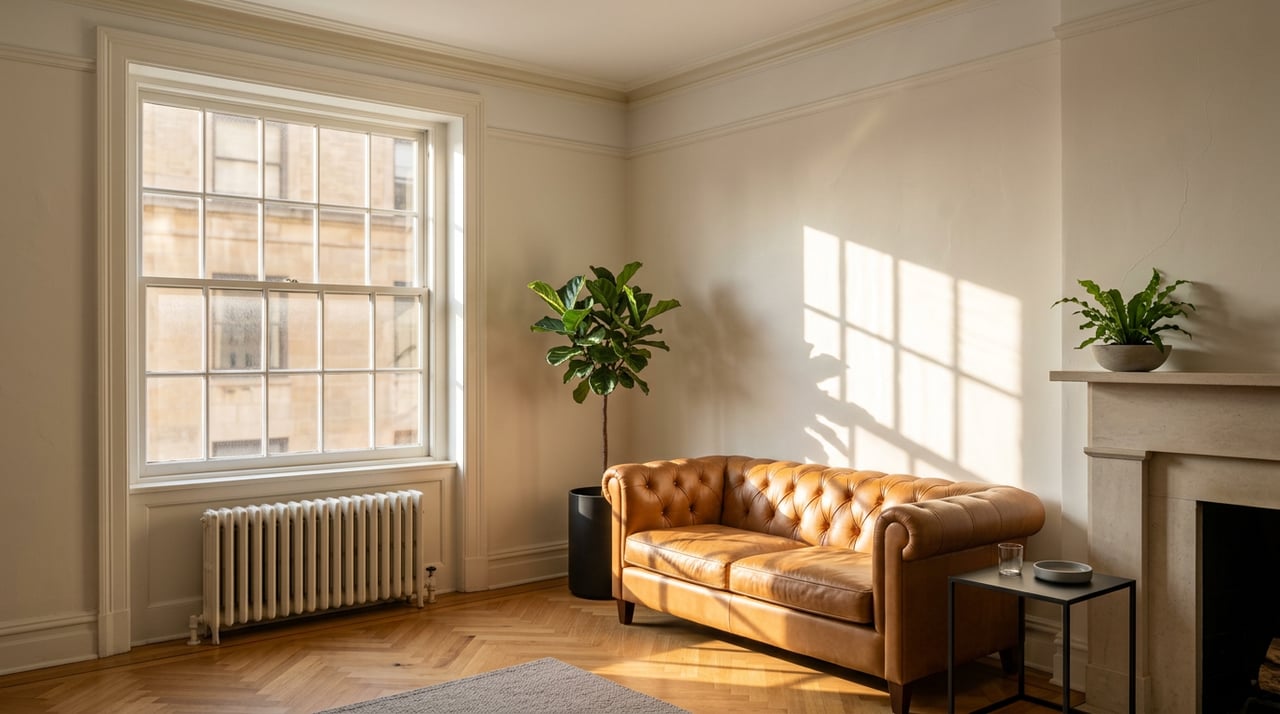
Representative loft buildings show what buyers are responding to inland. Factory Lofts at 66 North 1st Street is a 1910-built condo conversion with 21 units across six stories, known for 17-foot ceilings, exposed brick, and restored timber columns. Jackson Foundry Lofts is a 2007 conversion of a former foundry and book depository into 21 loft condominiums in a four-story building.
This is a different value proposition from a waterfront tower. Waterfront condos tend to sell newer systems, extensive amenities, services, and view corridors. Inland lofts tend to appeal through volume, character, adaptive reuse, and a smaller-scale living experience.
Neither is inherently better. It depends on what matters most to you.
What buyers should weigh before making a move
If you are deciding whether the Williamsburg waterfront is the right fit, a few questions can help clarify the search.
Prioritize lifestyle first
Think about how you want your home to function day to day. If you value concierge service, amenities, newer construction, and a polished full-service environment, the waterfront may feel like the more natural choice.
If you care more about original details, loft proportions, and a building with a more intimate scale, inland Williamsburg may offer the stronger fit. The two experiences can be dramatically different even when they are close geographically.
Model total monthly costs
It is easy to focus on the purchase price and overlook the monthly numbers. In this market, common charges and taxes can meaningfully shape affordability and long-term comfort.
That is especially true in luxury product with large amenity packages. Before moving forward, make sure you understand the full monthly picture for the exact unit and building you are considering.
Understand where the premium comes from
On the waterfront, buyers often pay more for a combination of factors rather than one single feature. Views, building services, access to open space, newer systems, and direct waterfront positioning can all contribute to pricing.
Knowing that helps you judge value more clearly. A premium may make sense to you if those features line up with how you live. If they do not, a loft or non-waterfront option may deliver a better personal fit.
Look at the building, not just the neighborhood
In this micro-market, building-level differences can be significant. Two waterfront buildings may sit blocks apart and still offer very different amenity packages, monthly carrying costs, layouts, and pricing strategies.
That is why broad neighborhood averages only go so far. The real decision often comes down to the exact building and even the exact line within the building.
Williamsburg’s waterfront has matured into one of Brooklyn’s most distinct new development corridors. It offers a very specific blend of views, services, public open space, and direct Manhattan access, but it also comes with pricing and carrying costs that need careful scrutiny. If you understand it as its own micro-market, you will be in a much stronger position to buy well and choose the version of Williamsburg that truly fits your lifestyle.
If you are weighing waterfront new development against loft conversions, or comparing Williamsburg with other cross-river options, Bill and Guy can help you evaluate the details with a clear, tailored strategy.
FAQs
What makes Williamsburg’s waterfront different from inland Williamsburg?
- Williamsburg’s waterfront was shaped by rezoning for higher-density residential and mixed-use development with parks and a public walkway, while inland areas kept more of a lower-rise, mixed-use character.
What types of new developments are common on the Williamsburg waterfront?
- The waterfront is dominated by full-service condo towers, rental towers, and master-planned mixed-use projects with large amenity packages and public-facing open space.
What are typical prices for Williamsburg waterfront new development condos?
- Recent examples show studios starting around the mid-$700,000s at some buildings, one-bedrooms ranging from roughly $1.09 million to about $2 million, and larger homes reaching well above $5 million depending on the building, floor, and view.
Why should buyers verify taxes in Williamsburg waterfront buildings?
- Tax treatment can vary by project and program eligibility, including legacy 421-a and newer 485-x structures, so buyers should confirm the offering plan and tax records for the specific building before estimating monthly costs.
How do waterfront condos compare with Williamsburg loft conversions?
- Waterfront condos usually emphasize views, services, amenities, and newer systems, while inland loft conversions tend to emphasize architectural character, ceiling height, exposed materials, and a more boutique scale.
Is Williamsburg’s waterfront inventory still active for buyers?
- Yes. Recent building snapshots for major waterfront condo projects showed available sales inventory, which suggests active sell-through rather than a fully stabilized resale market.