How do two data providers, pulling from the same closed sales in the same three-month window, land on medians that differ by nearly $900,000? Redfin's read on Brooklyn Heights through June 2026 puts the median sale price at $1.9 million, up 48 percent year over year. PropertyShark, looking at Q2 2026, puts it at $1 million, down 8.8 percent. Zillow's separate estimate, as of July 2026, lands at $1,515,242, up 6.9 percent. None of these numbers is wrong. All of them are measuring a market too small to trust a single headline figure.
That's the real story in Brooklyn Heights this year, and it matters more to a buyer or seller here than it would almost anywhere else in Brooklyn, because the mechanism that breaks the median is the same mechanism that quietly sets what you'll actually pay: how few homes trade here, and how much a single landmarked property can move the number.
A Market Too Thin to Average
Redfin counted 35 homes sold in Brooklyn Heights in June 2026, down from 56 the year before. PropertyShark counted 54 deals for the full second quarter, a 20.6 percent drop year over year. When your entire dataset for a quarter is a few dozen closings, one outsized sale doesn't nudge the median. It relocates it.
Consider what was actually trading. In July 2026, a five-story, roughly 7,900-square-foot Civil War-era brownstone at 192 Columbia Heights, steps from the Promenade, changed hands off-market for $24.5 million. It's one of the largest single-family sales in Brooklyn this year. That same quarter's dataset also includes whatever one- and two-bedroom co-ops closed at $700,000 or $900,000 a few blocks away on the other side of the historic district. Both are "a Brooklyn Heights home sale." A median built from that mix tells you almost nothing about what your specific transaction will look like.
This isn't a new phenomenon in the neighborhood. The borough-record brownstone sale remains 8 Montague Terrace at $25.5 million back in 2020. In 2025, 1 Sidney Place closed around $22.1 million, and 2024 and 2025 also saw Heights rowhouses at 126 Pierrepont Street, 20 Remsen Street, and 48 Willow Place trade in the $10 million to $12.5 million range. Drop any one of those into a 35-to-54-sale quarter and the median swings by six figures before you account for a single condo.
The Variable That Actually Explains Price
If the median won't tell you what a Brooklyn Heights home is worth, what will? Largely, it's whether the house has already cleared the neighborhood's single biggest transaction friction: landmark approval.
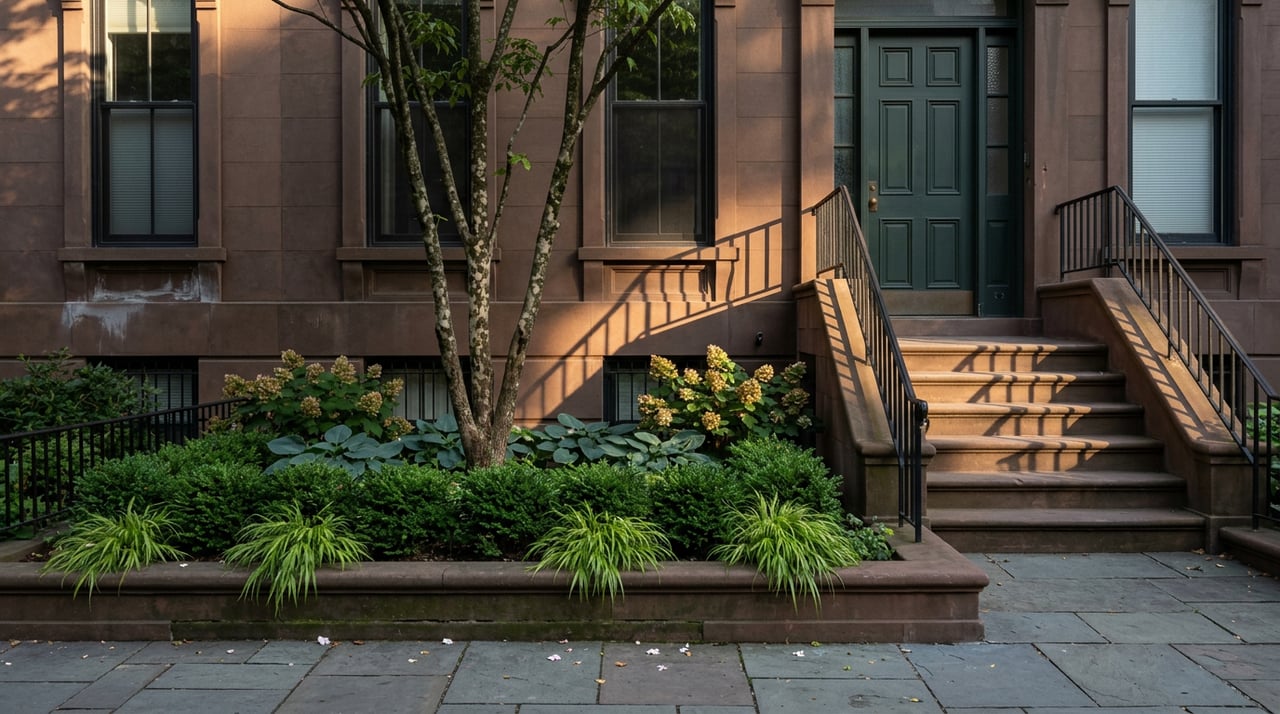
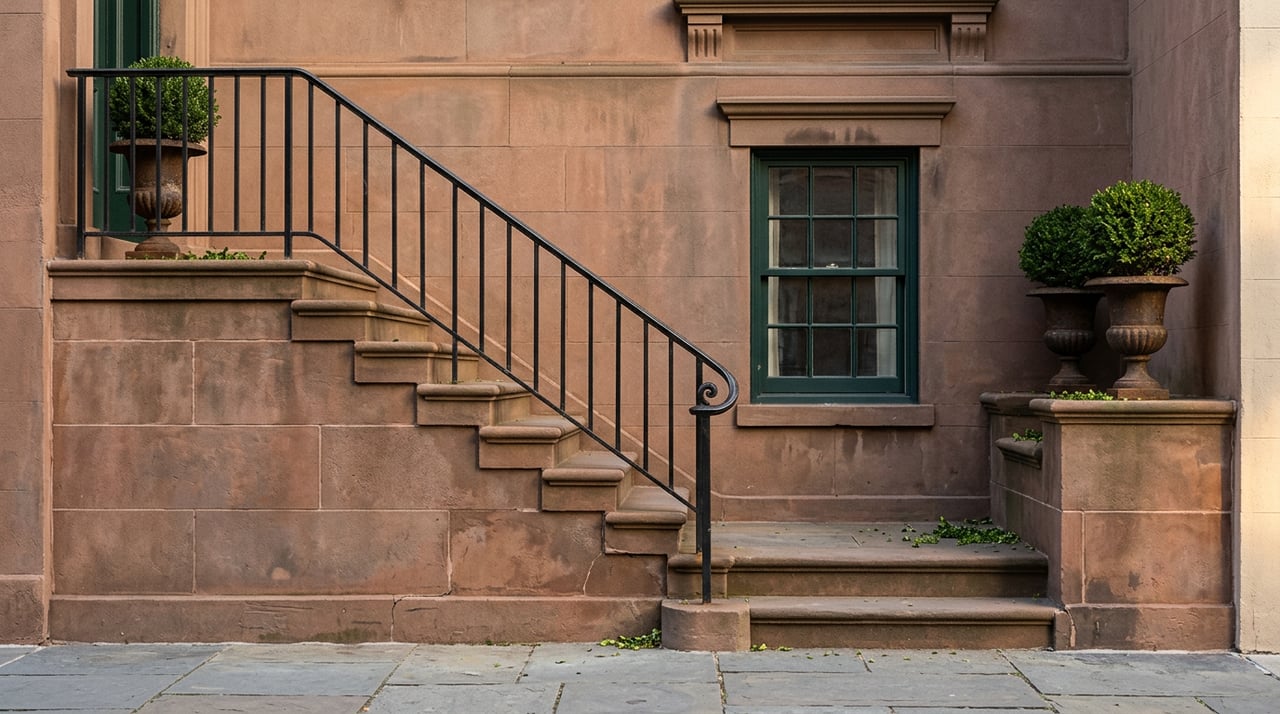
Brooklyn Heights became New York City's first historic district in 1965, years before Park Slope or DUMBO received similar status. The boundary runs roughly from Cadman Plaza West on the north down to Atlantic Avenue on the south, bounded by the BQE to the west and an irregular line following Clinton and Henry Streets to the east. Inside that boundary, the Landmarks Preservation Commission has jurisdiction over anything visible from the street: facades, cornices, stoops, ironwork, and window replacements. Interior work is generally exempt unless the interior itself carries a separate designation, which is rare for residential brownstones.
That distinction sounds like fine print until you're the one budgeting a renovation. Landmark-compliant exterior work, using historically accurate materials like custom wood windows and matched masonry, typically runs 15 to 25 percent above a comparable non-landmarked renovation. And the approval path itself splits into two very different timelines depending on scope:
- A Certificate of No Effect, for work that needs a Department of Buildings permit but doesn't touch a protected feature, is often approved within about 10 business days once the application is complete, with a legal decision deadline of 30 business days after that.
- A Certificate of Appropriateness, required when work does affect protected features or doesn't conform to district rules, needs a public hearing and a Commission vote. Routine cases run 3 to 6 months. Rooftop additions, major facade changes, or anything requiring multiple design revisions can run 6 to 12 months or longer, before DOB permitting adds its own several weeks to months on top.
A full gut renovation of a Brooklyn Heights brownstone or pre-war co-op typically takes 6 to 12 months of construction, but that clock doesn't start until design, permitting, and, for co-ops, board approval clear first, which can add another 3 to 5 months before a contractor ever touches the building.
Why This Beats the Median as a Pricing Tool
None of that shows up in a Zillow estimate or a Redfin median. It shows up in the closing timeline, the renovation budget, and, ultimately, the price a buyer is willing to pay for certainty versus the discount they'll want for uncertainty.
A brownstone that has already been through Commission review, with a Certificate of Appropriateness on file and the exterior work completed to landmark standard, is selling a buyer something real: no approval clock, no 15-to-25 percent compliance premium still ahead of them, no risk of a hearing that gets pushed for revisions. A comparable house next door that still needs that work carries all of that risk, and buyers who know the neighborhood price for it accordingly.
The Brooklyn Heights Association, one of the city's oldest civic groups, has spent decades pushing for the preservation standards that keep this district intact, which means neighbors and block associations tend to pay closer attention to construction here than in most of Brooklyn. That's a reason to plan early, not a reason to avoid the work.
For sellers, the practical move is to stop anchoring to whatever median a portal shows this month and instead build a comp set tight to product type, block, width, and renovation status, the same way an agent working this district every week already does. For buyers, the move is to ask two questions before the median even enters the conversation: has the exterior already cleared LPC review, and if not, which approval path does the remaining work fall into.
A Few Questions Worth Asking Before You Anchor to Any Number
Does landmark status lower resale value in Brooklyn Heights? No. The preserved streetscape is one of the neighborhood's strongest selling points. The premium shows up in renovation cost and timeline, not in what buyers are willing to pay for a finished, compliant home.
How much lead time should I budget before listing a brownstone that still needs exterior work? If the scope is minor and in-kind, plan on a few weeks to a couple of months for staff-level sign-off. If it touches a protected feature or needs a public hearing, budget 3 to 6 months at minimum, longer for anything involving a rooftop or major facade change, before construction even begins.
Why do headline price swings in Brooklyn Heights look so dramatic compared to bigger Brooklyn neighborhoods? Volume. A neighborhood trading 35 to 54 homes a quarter will always show more volatile medians than one trading in the hundreds, because a single multi-million-dollar closing carries far more statistical weight.
Brooklyn Heights doesn't reward anyone who prices off a headline. It rewards buyers and sellers who understand what's actually sitting behind a specific facade, LPC file and all. If you're trying to figure out what a particular Brooklyn Heights property is really worth, or what it will take to get one ready for market, Bill and Guy can walk you through the comps that actually apply to your block and your building. Request a complimentary home valuation to start with numbers built for your address, not the whole neighborhood's noise.